Administration of Ibuprofen Can Decrease Pain. Why Does This Cox Inhibitor Have This Effect?
 | |
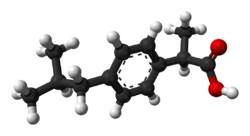 | |
| Clinical data | |
|---|---|
| Pronunciation | , , EYE-bew-PROH-fən |
| Trade names | Advil, Motrin, Nurofen, others |
| Other names | isobutylphenylpropionic acid |
| AHFS/Drugs.com | Monograph |
| MedlinePlus | a682159 |
| License data |
|
| Pregnancy category |
|
| Routes of administration | Past oral fissure, rectal, topical, intravenous |
| ATC lawmaking |
|
| Legal condition | |
| Legal condition |
|
| Pharmacokinetic information | |
| Bioavailability | fourscore–100% (past mouth),[ii] 87% (rectal) |
| Protein binding | 98%[3] |
| Metabolism | Liver (CYP2C9)[three] |
| Metabolites | ibuprofen glucuronide, 2-hydroxyibuprofen, 3-hydroxyibuprofen, carboxy-ibuprofen, 1-hydroxyibuprofen |
| Onset of action | 30min[4] |
| Elimination half-life | 2–4 h[5] |
| Excretion | Urine (95%)[3] [half dozen] |
| Identifiers | |
| IUPAC name
| |
| CAS Number |
|
| PubChem CID |
|
| IUPHAR/BPS |
|
| DrugBank |
|
| ChemSpider |
|
| UNII |
|
| KEGG |
|
| ChEBI |
|
| ChEMBL |
|
| PDB ligand |
|
| CompTox Dashboard (EPA) |
|
| ECHA InfoCard | 100.036.152  |
| Chemical and physical information | |
| Formula | C thirteen H 18 O 2 |
| Molar mass | 206.285 g·mol−ane |
| 3D model (JSmol) |
|
| Chirality | Racemic mixture |
| Density | 1.03 g/cm3 |
| Melting point | 75 to 78 °C (167 to 172 °F) |
| Boiling point | 157 °C (315 °F) at 4 mmHg |
| Solubility in water | 0.021 mg/mL (20 °C) |
| SMILES
| |
| InChI
| |
| (verify) | |

Ibuprofen is a medication in the nonsteroidal anti-inflammatory drug (NSAID) class that is used for treating hurting, fever, and inflammation.[vii] This includes painful menstrual periods, migraines, and rheumatoid arthritis.[7] It may also be used to shut a patent ductus arteriosus in a premature infant.[vii] Information technology tin can be used by rima oris or intravenously.[7] It typically begins working within an hour.[7]
Mutual side furnishings include heartburn and a rash.[7] Compared to other NSAIDs, it may have other side effects such as gastrointestinal bleeding.[viii] Information technology increases the risk of eye failure, kidney failure, and liver failure.[7] At low doses, it does non announced to increment the adventure of heart attack; however, at higher doses it may.[8] Ibuprofen tin can too worsen asthma.[viii] While it is unclear whether it is safe in early pregnancy,[vii] information technology appears to exist harmful in later pregnancy and therefore is non recommended.[nine] Similar other NSAIDs, information technology works by inhibiting the production of prostaglandins by decreasing the activity of the enzyme cyclooxygenase (COX).[seven] Ibuprofen is a weaker anti-inflammatory agent than other NSAIDs.[8]
Ibuprofen was discovered in 1961 by Stewart Adams and John Nicholson[ten] while working at Boots UK Limited and initially marketed as Brufen.[11] It is available under a number of trade names, including Nurofen, Advil and Motrin.[seven] [12] It was start marketed in 1969 in the Great britain and in 1974 in the United States.[7] [11] It is on the World Health Organisation's List of Essential Medicines.[thirteen] It is available equally a generic medication.[7] In 2019, it was the 29th most ordinarily prescribed medication in the United States, with more than 21million prescriptions.[xiv] [15]
Medical uses [edit]

Instance of some 200 mg ibuprofen tablets
Ibuprofen is used primarily to treat fever (including post-vaccination fever), mild to moderate pain (including pain relief afterward surgery), painful menstruation, osteoarthritis, dental hurting, headaches, and pain from kidney stones. About 60% of people reply to any NSAID; those who exercise not answer well to a particular one may respond to some other.[16]
It is used for inflammatory diseases such every bit juvenile idiopathic arthritis and rheumatoid arthritis.[17] [18] It is also used for pericarditis and patent ductus arteriosus.[19] [20]
If a patient is self-treating with over-the-counter Ibuprofen, it should non exist taken for more than 10 days, unless the patient has spoken with their physician.[21]
Lysine [edit]
In some countries, ibuprofen lysine (the lysine salt of ibuprofen, sometimes chosen "ibuprofen lysinate") is licensed for treatment of the same weather as ibuprofen; the lysine table salt is used because it is more h2o-soluble.[22]
Ibuprofen lysine is being sold for rapid hurting relief[23] because, given in grade of a lysine salt, assimilation is much quicker (35 minutes compared to 90–120 minutes). However, a clinical trial with 351 participants in 2020, which was funded by Sanofi, establish that there is no significant difference between ibuprofen and ibuprofen lysine apropos the eventual onset of activity or analgesic efficacy.[24] [ unreliable medical source ]
In 2006, ibuprofen lysine was canonical in the U.South. by the Nutrient and Drug Administration (FDA) for closure of patent ductus arteriosus in premature infants weighing between 500 and i,500 yard (i and 3 lb), who are no more than 32 weeks' gestational historic period when usual medical management (such as fluid restriction, diuretics, and respiratory support) is not effective.[25]
Adverse furnishings [edit]
Adverse effects include nausea, dyspepsia, diarrhea, constipation, gastrointestinal ulceration/bleeding, headache, dizziness, rash, salt and fluid retention, and high blood pressure level.[xviii] [26]
Infrequent agin effects include esophageal ulceration, eye failure, high blood levels of potassium, kidney impairment, confusion, and bronchospasm.[18] Ibuprofen can exacerbate asthma, sometimes fatally.[27]
Allergic reactions, including anaphylaxis and anaphylactic daze, may occur.[28] Ibuprofen may be quantified in blood, plasma, or serum to demonstrate the presence of the drug in a person having experienced an anaphylactic reaction, confirm a diagnosis of poisoning in people who are hospitalized, or assist in a medicolegal death investigation. A monograph relating ibuprofen plasma concentration, time since ingestion, and risk of developing renal toxicity in people who take overdosed has been published.[29]
In October 2020, the U.S. Food and Drug Administration (FDA) required the drug label to be updated for all nonsteroidal anti-inflammatory medications to draw the run a risk of kidney problems in unborn babies that event in low amniotic fluid.[30] [31] They recommend avoiding NSAIDs in significant women at 20 weeks or later in pregnancy.[30] [31]
Cardiovascular risk [edit]
Along with several other NSAIDs, chronic ibuprofen use has been constitute correlated with run a risk of progression to hypertension in women, though less than for acetaminophen,[32] and myocardial infarction (heart attack),[33] specially amid those chronically using higher doses. On 9 July 2015, the U.S. Nutrient and Drug Administration (FDA) toughened warnings of increased heart assault and stroke risk associated with ibuprofen and related NSAIDs; the NSAID aspirin is non included in this warning.[34] The European Medicines Bureau (EMA) issued similar warnings in 2015.[35] [36]
Skin [edit]
Forth with other NSAIDs, ibuprofen has been associated with the onset of bullous pemphigoid or pemphigoid-like baking.[37] As with other NSAIDs, ibuprofen has been reported to be a photosensitising agent,[38] but it is considered a weak photosensitising agent compared to other members of the 2-arylpropionic acid class. Similar other NSAIDs, ibuprofen is an extremely rare cause of the autoimmune disease Stevens–Johnson syndrome (SJS).[39] [40] Ibuprofen is also an extremely rare crusade of toxic epidermal necrolysis.[41]
Interactions [edit]
Alcohol [edit]
Drinking alcohol when taking ibuprofen may increase the chance of stomach bleeding.[42]
Aspirin [edit]
According to the Nutrient and Drug Administration (FDA), "ibuprofen can interfere with the antiplatelet effect of depression-dose aspirin, potentially rendering aspirin less effective when used for cardioprotection and stroke prevention". Allowing sufficient time betwixt doses of ibuprofen and immediate-release (IR) aspirin tin avoid this problem. The recommended elapsed time between a dose of ibuprofen and a dose of aspirin depends on which is taken showtime. It would be 30 minutes or more for ibuprofen taken after IR aspirin, and viii hours or more for ibuprofen taken before IR aspirin. However, this timing cannot be recommended for enteric-coated aspirin. Only, if ibuprofen is taken only occasionally without the recommended timing, the reduction of the cardioprotection and stroke prevention of a daily aspirin regimen is minimal.[43]
Paracetamol [edit]
Ibuprofen combined with paracetamol is considered generally safe in children for short-term usage.[44]
Overdose [edit]
Ibuprofen overdose has become common since it was licensed for OTC apply. Many overdose experiences are reported in the medical literature, although the frequency of life-threatening complications from ibuprofen overdose is low.[45] Human response in cases of overdose ranges from an absence of symptoms to a fatal outcome despite intensive-care treatment. Near symptoms are an excess of the pharmacological action of ibuprofen, and include abdominal pain, nausea, vomiting, drowsiness, dizziness, headache, ear ringing, and nystagmus. Rarely, more astringent symptoms, such as gastrointestinal bleeding, seizures, metabolic acidosis, loftier blood levels of potassium, low blood pressure, slow heart charge per unit, fast heart rate, atrial fibrillation, coma, liver dysfunction, acute kidney failure, cyanosis, respiratory depression, and cardiac arrest have been reported.[46] The severity of symptoms varies with the ingested dose and the time elapsed; however, individual sensitivity also plays an important function. Generally, the symptoms observed with an overdose of ibuprofen are similar to the symptoms caused by overdoses of other NSAIDs.
Correlation between severity of symptoms and measured ibuprofen plasma levels is weak. Toxic effects are unlikely at doses below 100mg/kg, but can be severe to a higher place 400mg/kg (around 150 tablets of 200mg units for an boilerplate man);[47] however, big doses practise not indicate the clinical course is likely to be lethal.[48] A precise lethal dose is hard to determine, as information technology may vary with age, weight, and concomitant conditions of the private person.
Handling to address an ibuprofen overdose is based on how the symptoms present. In cases presenting early, decontamination of the stomach is recommended. This is achieved using activated charcoal; charcoal adsorbs the drug before it tin enter the bloodstream. Gastric lavage is now rarely used, simply can be considered if the corporeality ingested is potentially life-threatening, and it can be performed within lx minutes of ingestion. Purposeful vomiting is not recommended.[49] The bulk of ibuprofen ingestions produce only mild effects, and the management of overdose is straightforward. Standard measures to maintain normal urine output should be instituted and kidney office monitored.[47] Since ibuprofen has acidic properties and is too excreted in the urine, forced element of group i diuresis is theoretically beneficial. However, because ibuprofen is highly protein-bound in the blood, the kidneys' excretion of unchanged drug is minimal. Forced alkali metal diuresis is, therefore, of limited benefit.[fifty]
Miscarriage [edit]
A written report of pregnant women suggests that those taking any blazon or amount of NSAIDs (including ibuprofen, diclofenac and naproxen) were 2.4 times more likely to miscarry than those not taking the medications.[51] However, an Israeli report establish no increased risk of miscarriage in the group of mothers using NSAIDs.[52]
Pharmacology [edit]
NSAIDs such equally ibuprofen work by inhibiting the cyclooxygenase (COX) enzymes, which convert arachidonic acrid to prostaglandin H2 (PGH2). PGH2, in turn, is converted past other enzymes to several other prostaglandins (which are mediators of pain, inflammation, and fever) and to thromboxane Atwo (which stimulates platelet aggregation, leading to the formation of claret clots).
Similar aspirin and indomethacin, ibuprofen is a nonselective COX inhibitor, in that it inhibits two isoforms of cyclooxygenase, COX-i and COX-two. The analgesic, antipyretic, and anti-inflammatory activity of NSAIDs appears to operate mainly through inhibition of COX-2, which decreases the synthesis of prostaglandins involved in mediating inflammation, pain, fever, and swelling. Antipyretic furnishings may be due to action on the hypothalamus, resulting in an increased peripheral blood flow, vasodilation, and subsequent estrus dissipation. Inhibition of COX-1 instead would exist responsible for unwanted effects on the alimentary canal.[53] However, the function of the private COX isoforms in the analgesic, anti-inflammatory, and gastric damage effects of NSAIDs is uncertain, and different compounds cause unlike degrees of analgesia and gastric damage.[54]
Ibuprofen is administered equally a racemic mixture. The R-enantiomer undergoes all-encompassing interconversion to the S-enantiomer in vivo. The South-enantiomer is believed to be the more pharmacologically active enantiomer.[55] The R-enantiomer is converted through a series of 3 principal enzymes. These enzymes include acyl-CoA-synthetase, which converts the R-enantiomer to (−)-R-ibuprofen I-CoA; ii-arylpropionyl-CoA epimerase, which converts (−)-R-ibuprofen I-CoA to (+)-S-ibuprofen I-CoA; and hydrolase, which converts (+)-Due south-ibuprofen I-CoA to the S-enantiomer.[41] In add-on to the conversion of ibuprofen to the S-enantiomer, the body tin can metabolize ibuprofen to several other compounds, including numerous hydroxyl, carboxyl and glucuronyl metabolites. Virtually all of these have no pharmacological furnishings.[41]
Unlike virtually other NSAIDs, ibuprofen also acts every bit an inhibitor of Rho kinase and may be useful in recovery from spinal-cord injury.[56] [57]
Pharmacokinetics [edit]
Afterward oral administration, peak serum concentration is reached after 1–2 hours, and upwardly to 99% of the drug is bound to plasma proteins.[58] The majority of ibuprofen is metabolized and eliminated within 24 hours in the urine; withal, one% of the unchanged drug is removed through biliary excretion.[55]
Chemistry [edit]
Ibuprofen is practically insoluble in water, only very soluble in most organic solvents like ethanol (66.xviiig/100mL at 40°C for 90% EtOH), methanol, acetone and dichloromethane.[59]
The original synthesis of ibuprofen by the Boots Group started with the compound ii-methylpropylbenzene. The synthesis took six steps. A mod, greener technique for the synthesis involves only three steps.[60]
Stereochemistry [edit]
Ibuprofen, like other 2-arylpropionate derivatives such as ketoprofen, flurbiprofen and naproxen, contains a stereocenter in the α-position of the propionate moiety. The production sold in pharmacies is a racemic mixture of the S and R-isomers. The South (dextrorotatory) isomer is the more biologically active; this isomer has been isolated and used medically (see dexibuprofen for details).[59]
The isomerase enzyme, alpha-methylacyl-CoA racemase, converts (R)-ibuprofen into the (Due south)-enantiomer.[61] [62] [63]
History [edit]

Ibuprofen was derived from propionic acrid past the enquiry arm of Boots Group during the 1960s.[64] The name is derived from the 3 functional groups: isobutyl (ibu) propionic acid (pro) phenyl (fen). Its discovery was the event of inquiry during the 1950s and 1960s to find a safer alternative to aspirin.[11] [65] The molecule was discovered and synthesized past a squad led by Stewart Adams, with a patent awarding filed in 1961.[11] Adams initially tested the drug equally handling for his hangover.[66]
Despite the fact that his name has been forgotten in history, for the evolution of the molecule, the role of catalan Antonio Ribera Blancafort was fundamental.[67] [68]
The drug was launched every bit a treatment for rheumatoid arthritis in the Great britain in 1969, and in the U.s. in 1974. Later, in 1983 and 1984, it became the start NSAID (other than aspirin) to be bachelor over the counter (OTC) in these two countries.[xi] [65] Dr. Adams was subsequently awarded an Order of the British Empire (OBE) in 1987. Boots was awarded the Queen's Award for Technical Achievement in 1987 for the development of the drug.[xi]
In November 2013, work on ibuprofen was recognized by the erection of a Purple Social club of Chemistry blue plaque at Boots' Beeston Factory site in Nottingham, which reads:[69] [ failed verification ]
In recognition of the work during the 1980s by The Boots Company PLC on the development of ibuprofen which resulted in its motility from prescription only condition to over the counter sale, therefore expanding its employ to millions of people worldwide
and another at BioCity Nottingham, the site of the original laboratory, which reads:[69]
In recognition of the pioneering inquiry work, hither on Pennyfoot Street, past Dr Stewart Adams and Dr John Nicholson in the Research Department of Boots which led to the discovery of ibuprofen used by millions worldwide for the relief of pain.
Society and culture [edit]
Availability [edit]

A bottle of generic ibuprofen
Ibuprofen was made bachelor under prescription in the United Kingdom in 1969, and in the Us in 1974.[seventy] In the years since, the skilful tolerability profile, along with extensive feel in the population, as well equally in so-called stage-4 trials (postapproval studies), accept resulted in the availability of ibuprofen OTC in pharmacies worldwide, as well as in supermarkets and other general retailers.
Ibuprofen is its International nonproprietary name (INN), British Approved Proper name (BAN), Australian Approved Proper name (AAN) and United states Adopted Name (USAN). In the U.Southward., Motrin has been on the marketplace since 1974,[71] and Advil has been on the marketplace since 1984.[72] Ibuprofen is ordinarily available in the United States up to the FDA's 1984 dose limit OTC, rarely used higher by prescription.[73] [ failed verification ]
In 2009, the first injectable conception of ibuprofen was approved in the The states, under the merchandise name Caldolor.[74] [75]
Road [edit]
It tin be used by oral fissure, as a tablet, sheathing or suspension, or intravenously.[7]
Enquiry [edit]
Ibuprofen is sometimes used for the handling of acne considering of its anti-inflammatory properties, and has been sold in Japan in topical form for adult acne.[76] [77] As with other NSAIDs, ibuprofen may be useful in the treatment of severe orthostatic hypotension (low blood pressure when standing upwardly).[78] NSAIDs are of unclear utility in the prevention and treatment of Alzheimer's disease.[79] [fourscore]
Ibuprofen has been associated with a lower risk of Parkinson'due south disease and may delay or prevent it. Aspirin, other NSAIDs, and paracetamol (acetaminophen) had no effect on the hazard for Parkinson'due south.[81] In March 2011, researchers at Harvard Medical School announced in Neurology that ibuprofen had a neuroprotective effect against the risk of developing Parkinson'southward disease.[82] [83] [84] People regularly consuming ibuprofen were reported to take a 38% lower adventure of developing Parkinson's disease, just no such effect was found for other pain relievers, such as aspirin and paracetamol. Use of ibuprofen to lower the risk of Parkinson'south disease in the full general population would not exist problem-free, given the possibility of adverse effects on the urinary and digestive systems.[85]
Some dietary supplements might be dangerous to take along with ibuprofen and other NSAIDs, merely equally of 2016[update] more than research needs to be conducted to be sure. These supplements include those that tin foreclose platelet assemblage, including ginkgo, garlic, ginger, bilberry, dong quai, feverfew, ginseng, turmeric, meadowsweet (Filipendula ulmaria), and willow (Salix spp.); those that contain coumarin, including chamomile, horse anecdote, fenugreek and red clover; and those that increase the risk of haemorrhage, like tamarind.[86]
COVID‑19 [edit]
Ibuprofen is being researched in Córdoba, Argentina equally a handling for COVID‑19, using it in a hypertonic solution and inhaling information technology. The clinical trials started in June 2020.[87] There is no validated (peer-reviewed) publication showing the effectiveness of ibuprofen in handling of COVID‑19, nor is in that location any bear witness that it blocks SARS-CoV-2 infectivity in any exam, either on cultured cells or in animals. The only publication from the Argentine grouping is in the controversial journal "Medical Hypotheses"[88] and contains no data of any sort on the effectiveness of ibuprofen. It simply makes a hypothetical proffer, based primarily on data from other viruses that are very different from SARS-CoV-2.
References [edit]
- ^ Use During Pregnancy and Breastfeeding
- ^ Davanzo R, Bua J, Paloni G, Facchina G (Nov 2014). "Breastfeeding and migraine drugs". European Journal of Clinical Pharmacology (Review). 70 (11): 1313–1324. doi:10.1007/s00228-014-1748-0. PMID 25217187. S2CID 17144030.
- ^ a b c Davies NM (February 1998). "Clinical pharmacokinetics of ibuprofen. The first thirty years". Clinical Pharmacokinetics. 34 (ii): 101–154. doi:x.2165/00003088-199834020-00002. PMID 9515184. S2CID 1186212.
- ^ "ibuprofen". Archived from the original on 13 Jan 2015. Retrieved 31 January 2015.
- ^ Grosser T, Ricciotti Eastward, FitzGerald GA (August 2017). "The Cardiovascular Pharmacology of Nonsteroidal Anti-Inflammatory Drugs". Trends in Pharmacological Sciences (Review). 38 (8): 733–748. doi:10.1016/j.tips.2017.05.008. PMC5676556. PMID 28651847.
- ^ "Brufen Tablets And Syrup" (PDF). Therapeutic Appurtenances Administration. 31 July 2012. Archived from the original on 20 Baronial 2016. Retrieved 8 May 2014.
- ^ a b c d e f one thousand h i j k l one thousand "Ibuprofen". The American Order of Health-Organisation Pharmacists. Archived from the original on ix September 2017. Retrieved 12 October 2016.
- ^ a b c d British National Formulary, March 2014–September 2014 (2014 ed.). London: British Medical Association. 2014. pp. 686–688. ISBN978-0857110862.
- ^ "Ibuprofen Pregnancy and Breastfeeding Warnings". Drugs.com. Archived from the original on 9 September 2017. Retrieved 22 May 2016.
- ^ Kindy D. "The Inventor of Ibuprofen Tested the Drug on His Own Hangover". Smithsonian Magazine . Retrieved 3 July 2021.
Stewart Adams and his associate John Nicholson invented a pharmaceutical drug known as ii-(iv-isobutylphenyl) propionic acid.
- ^ a b c d eastward f Halford GM, Lordkipanidzé M, Watson SP (2012). "50th anniversary of the discovery of ibuprofen: an interview with Dr Stewart Adams". Platelets. 23 (half-dozen): 415–422. doi:x.3109/09537104.2011.632032. PMID 22098129. S2CID 26344532.
- ^ "Chemistry in your cupboard: Nurofen". RSC Pedagogy. Archived from the original on 5 June 2014.
- ^ World Health Organization (2021). World Health Organization model list of essential medicines: 22nd list (2021). Geneva: World Health Arrangement. hdl:10665/345533. WHO/MHP/HPS/EML/2021.02.
- ^ "The Superlative 300 of 2019". ClinCalc. Retrieved xvi October 2021.
- ^ "Ibuprofen. Drug Usage Statistics". ClinCalc . Retrieved 16 Oct 2021.
- ^ "10.1.1 Non-steroidal anti-inflammatory drugs". British National Formulary. Archived from the original on 17 November 2016. Retrieved thirteen April 2016.
- ^ Articulation Formulary Committee (2013). British National Formulary (BNF) (65 ed.). London, Great britain: Pharmaceutical Press. pp. 665, 671. ISBN978-0-85711-084-viii.
- ^ a b c Rossi, S, ed. (2013). Australian Medicines Handbook (2013 ed.). Adelaide: The Australian Medicines Handbook Unit Trust. ISBN978-0-9805790-9-three.
- ^ Alabed Southward, Cabello JB, Irving GJ, Qintar 1000, Burls A (Baronial 2014). "Colchicine for pericarditis" (PDF). The Cochrane Database of Systematic Reviews (Review). 8 (8): CD010652. doi:x.1002/14651858.CD010652.pub2. PMID 25164988.
- ^ Rostas SE, McPherson CC (2016). "Pharmacotherapy for Patent Ductus Arteriosus: Current Options and Outstanding Questions". Current Pediatric Reviews (Review). 12 (2): 110–9. doi:10.2174/157339631202160506002028. PMID 27197952.
- ^ "Ibuprofen for adults". NHS.
{{cite spider web}}: CS1 maint: url-status (link) - ^ Beaver WT (April 2003). "Review of the analgesic efficacy of ibuprofen". International Journal of Clinical Practice. Supplement (135): thirteen–7. PMID 12723741.
- ^ Seibel 1000, Schaffler K, Reeh P, Reitmeir P (2004). "Comparison of 2 unlike preparations of ibuprofen with regard to the time grade of their analgesic outcome. A randomised, placebo-controlled, double-blind cross-over report using laser somatosensory evoked potentials obtained from UW-irritated skin in healthy volunteers". Arzneimittel-Forschung. 54 (viii): 444–51. doi:10.1055/due south-0031-1296997. PMID 15460211.
- ^ Kyselovič J, Koscova E, Lampert A, Weiser T (June 2020). "A Randomized, Double-Blind, Placebo-Controlled Trial of Ibuprofen Lysinate in Comparing to Ibuprofen Acid for Acute Postoperative Dental Pain". Hurting and Therapy. 9 (one): 249–259. doi:10.1007/s40122-019-00148-1. PMC7203382. PMID 31912434.
- ^ Fanos V, Antonucci R, Zaffanello M (2010). "Ibuprofen and acute kidney injury in the newborn". The Turkish Journal of Pediatrics. 52 (3): 231–8. PMID 20718179.
- ^ Castellsague J, Riera-Guardia N, Calingaert B, Varas-Lorenzo C, Fourrier-Reglat A, Nicotra F, et al. (December 2012). "Individual NSAIDs and upper gastrointestinal complications: a systematic review and meta-assay of observational studies (the SOS project)". Drug Safe. 35 (12): 1127–46. doi:x.1007/BF03261999. PMC3714137. PMID 23137151.
- ^ Ayres JG, Fleming DM, Whittington RM (May 1987). "Asthma expiry due to ibuprofen". Lancet. 1 (8541): 1082. doi:ten.1016/S0140-6736(87)90499-5. PMID 2883408. S2CID 38589434.
- ^ Shaikhain TA, Al-Husayni F, Elderberry K (December 2019). "Ibuprofen-induced Anaphylactic Shock in Adult Saudi Patient". Cureus. 11 (12): e6425. doi:10.7759/cureus.6425. PMC6970456. PMID 31993263.
- ^ Baselt R (2008). Disposition of Toxic Drugs and Chemicals in Man (8th ed.). Foster Urban center, U.s.: Biomedical Publications. pp. 758–761.
- ^ a b "FDA Warns that Using a Type of Pain and Fever Medication in 2nd Half of Pregnancy Could Atomic number 82 to Complications". U.S. Food and Drug Assistants (FDA) (Press release). 15 Oct 2020. Retrieved xv Oct 2020.
 This article incorporates text from this source, which is in the public domain .
 - ^ a b "NSAIDs may cause rare kidney problems in unborn babies". U.S. Food and Drug Assistants. 21 July 2017. Retrieved 15 October 2020. This article incorporates text from this source, which is in the public domain .
- ^ Forman JP, Stampfer MJ, Curhan GC (September 2005). "Non-narcotic analgesic dose and risk of incident hypertension in US women". Hypertension. 46 (3): 500–7. doi:10.1161/01.HYP.0000177437.07240.lxx. PMID 16103274.
- ^ Hippisley-Cox J, Coupland C (June 2005). "Risk of myocardial infarction in patients taking cyclo-oxygenase-2 inhibitors or conventional non-steroidal anti-inflammatory drugs: population based nested case-control analysis". BMJ. 330 (7504): 1366. doi:10.1136/bmj.330.7504.1366. PMC558288. PMID 15947398.
- ^ "FDA Drug Condom Advice: FDA strengthens warning that non-aspirin nonsteroidal anti-inflammatory drugs (NSAIDs) can cause heart attacks or strokes". U.S. Food and Drug Assistants (FDA). 9 July 2015. Archived from the original on 28 October 2019. Retrieved ix July 2015. Lay summary.
- ^ "Ibuprofen- and dexibuprofen-containing medicines". European Medicines Agency (EMA). 22 May 2015. EMA/325007/2015. Archived from the original on 28 Oct 2019. Retrieved 28 October 2019.
- ^ "Loftier-dose ibuprofen (≥2400mg/day): minor increase in cardiovascular risk". Medicines and Healthcare products Regulatory Agency (MHRA). 26 June 2015. Archived from the original on 28 Oct 2019. Retrieved 28 October 2019.
- ^ Chan LS (12 June 2014). Hall, R, Vinson, RP, Nunley, JR, Gelfand, JM, Elston, DM (eds.). "Bullous Pemphigoid Clinical Presentation". Medscape Reference. United States: WebMD. Archived from the original on ten November 2011.
- ^ Bergner T, Przybilla B (Jan 1992). "Photosensitization caused by ibuprofen". Journal of the American Academy of Dermatology. 26 (ane): 114–6. doi:10.1016/0190-9622(92)70018-b. PMID 1531054.
- ^ Raksha MP, Marfatia YS (2008). "Clinical study of cutaneous drug eruptions in 200 patients". Indian Journal of Dermatology, Venereology and Leprology. 74 (i): fourscore. doi:10.4103/0378-6323.38431. PMID 18193504.
- ^ Ward KE, Archambault R, Mersfelder TL (February 2010). "Severe agin pare reactions to nonsteroidal antiinflammatory drugs: A review of the literature". American Journal of Health-System Pharmacy. 67 (iii): 206–13. doi:10.2146/ajhp080603. PMID 20101062.
- ^ a b c Rainsford KD (2012). Ibuprofen: Pharmacology, Therapeutics and Side Effects. London: Springer.
- ^ "Ibuprofen". Drugs.com. Archived from the original on 6 August 2011.
- ^ "Information for Healthcare Professionals: Concomitant Utilise of Ibuprofen and Aspirin". U.South. Food and Drug Administration (FDA). September 2006. Archived from the original on 13 November 2010. Retrieved 22 November 2010. Lay summary.
- ^ Kanabar DJ (February 2017). "A clinical and safe review of paracetamol and ibuprofen in children". Inflammopharmacology. 25 (1): 1–9. doi:10.1007/s10787-016-0302-3. PMC5306275. PMID 28063133.
- ^ McElwee NE, Veltri JC, Bradford DC, Rollins DE (June 1990). "A prospective, population-based written report of acute ibuprofen overdose: complications are rare and routine serum levels not warranted". Register of Emergency Medicine. nineteen (6): 657–662. doi:10.1016/S0196-0644(05)82471-0. PMID 2188537.
- ^ Vale JA, Meredith TJ (January 1986). "Acute poisoning due to non-steroidal anti-inflammatory drugs. Clinical features and management". Medical Toxicology. 1 (1): 12–31. doi:x.1007/BF03259825. PMID 3537613. S2CID 25223555.
- ^ a b Volans Thousand, Hartley V, McCrea Southward, Monaghan J (March–April 2003). "Non-opioid analgesic poisoning". Clinical Medicine. three (2): 119–123. doi:10.7861/clinmedicine.3-2-119. PMC4952728. PMID 12737366.
- ^ Seifert SA, Bronstein Air conditioning, McGuire T (2000). "Massive ibuprofen ingestion with survival". Journal of Toxicology. Clinical Toxicology. 38 (i): 55–57. doi:ten.1081/clt-100100917. PMID 10696926. S2CID 38588541.
- ^ American Academy Of Clinical Toxico (2004). "Position paper: Ipecac syrup". Journal of Toxicology. Clinical Toxicology. 42 (2): 133–143. doi:ten.1081/CLT-120037421. PMID 15214617.
- ^ Hall AH, Smolinske SC, Conrad FL, Wruk KM, Kulig KW, Dwelle TL, Rumack BH (November 1986). "Ibuprofen overdose: 126 cases". Annals of Emergency Medicine. xv (11): 1308–1313. doi:10.1016/S0196-0644(86)80617-5. PMID 3777588.
- ^ Verma P, Clark CA, Spitzer KA, Laskin CA, Ray J, Koren G (July 2012). "Use of non-aspirin NSAIDs during pregnancy may increase the risk of spontaneous abortion". Testify-Based Nursing. xv (3): 76–77. doi:ten.1136/ebnurs-2011-100439. PMID 22411163. S2CID 28521248.
- ^ Daniel S, Koren G, Lunenfeld E, Bilenko Due north, Ratzon R, Levy A (March 2014). "Fetal exposure to nonsteroidal anti-inflammatory drugs and spontaneous abortions". CMAJ. 186 (5): E177–E182. doi:x.1503/cmaj.130605. PMC3956584. PMID 24491470.
- ^ Rao P, Knaus EE (September 2008). "Evolution of nonsteroidal anti-inflammatory drugs (NSAIDs): cyclooxygenase (COX) inhibition and beyond". Journal of Chemist's & Pharmaceutical Sciences. 11 (2): 81s–110s. doi:10.18433/J3T886. PMID 19203472.
- ^ Kakuta H, Zheng Ten, Oda H, Harada Southward, Sugimoto Y, Sasaki K, Tai A (April 2008). "Cyclooxygenase-i-selective inhibitors are attractive candidates for analgesics that do non cause gastric damage. blueprint and in vitro/in vivo evaluation of a benzamide-type cyclooxygenase-1 selective inhibitor". Journal of Medicinal Chemistry. 51 (8): 2400–2411. doi:10.1021/jm701191z. PMID 18363350.
- ^ a b "Ibuprofen". DrugBank. Archived from the original on 21 July 2014. Retrieved 24 July 2014.
- ^ Kopp MA, Liebscher T, Niedeggen A, Laufer S, Brommer B, Jungehulsing GJ, et al. (July 2012). "Small-molecule-induced Rho-inhibition: NSAIDs later spinal cord injury". Prison cell and Tissue Enquiry. 349 (1): 119–132. doi:10.1007/s00441-012-1334-7. PMC3744771. PMID 22350947.
- ^ Luo M, Li YQ, Lu YF, Wu Y, Liu R, Zheng YR, Yin Thousand (November 2020). "Exploring the potential of RhoA inhibitors to ameliorate exercise-recoverable spinal string injury: A systematic review and meta-analysis". Periodical of Chemical Neuroanatomy. 111: 101879. doi:10.1016/j.jchemneu.2020.101879. PMID 33197553.
- ^ Bushra R, Aslam Due north (July 2010). "An overview of clinical pharmacology of Ibuprofen". Oman Medical Periodical. 25 (3): 155–161. doi:10.5001/omj.2010.49. PMC3191627. PMID 22043330.
- ^ a b Brayfield, A, ed. (xiv January 2014). "Ibuprofen". Martindale: The Complete Drug Reference. London, UK: Pharmaceutical Printing. Retrieved 26 June 2014.
- ^ "The Synthesis of Ibuprofen". Royal Society of Chemistry. Retrieved 22 November 2018.
- ^ Tracy TS, Hall SD (March–April 1992). "Metabolic inversion of (R)-ibuprofen. Epimerization and hydrolysis of ibuprofenyl-coenzyme A". Drug Metabolism and Disposition. 20 (2): 322–327. PMID 1352228.
- ^ Chen CS, Shieh WR, Lu PH, Harriman S, Chen CY (July 1991). "Metabolic stereoisomeric inversion of ibuprofen in mammals". Biochimica et Biophysica Acta (BBA) - Protein Construction and Molecular Enzymology. 1078 (3): 411–417. doi:x.1016/0167-4838(91)90164-U. PMID 1859831.
- ^ Reichel C, Brugger R, Blindside H, Geisslinger G, Brune One thousand (Apr 1997). "Molecular cloning and expression of a ii-arylpropionyl-coenzyme A epimerase: a fundamental enzyme in the inversion metabolism of ibuprofen" (PDF). Molecular Pharmacology. 51 (4): 576–582. doi:x.1124/mol.51.4.576. PMID 9106621. S2CID 835701. Archived from the original (PDF) on 2 March 2019.
- ^ Adams SS (Apr 1992). "The propionic acids: a personal perspective". Journal of Clinical Pharmacology. 32 (4): 317–323. doi:ten.1002/j.1552-4604.1992.tb03842.x. PMID 1569234. S2CID 22857259.
- ^ a b Rainsford KD (Apr 2003). "Discovery, mechanisms of action and safety of ibuprofen". International Journal of Clinical Practice. Supplement (135): 3–8. PMID 12723739.
- ^ Lambert V (8 October 2007). "Dr Stewart Adams: 'I tested ibuprofen on my hangover'". The Daily Telegraph. Uk. Archived from the original on eighteen November 2015. Retrieved 23 October 2015. (Subscription required.)
- ^ Abel Thousand.G. "Antonio Ribera Blancafort, el padre del ibuprofeno". historia.nationalgeographic.com.es/ . Retrieved 26 December 2021.
- ^ "El 'Padre' Español del Ibuprofeno, Por Qué Reino Unido Ignora al Dr. Ribera". elespanol.com . Retrieved 26 December 2021.
- ^ a b "Chemic landmark plaque honours scientific discovery past and hereafter" (Press release). Royal Society of Chemistry (RSC). 21 Nov 2013.
- ^ "Written submission to the NDAC meeting on risks of NSAIDs presented by the International Ibuprofen Foundation". U.South. Food and Drug Administration (FDA). August 2002. Archived from the original on 15 August 2013. Retrieved 20 March 2014.
- ^ "New Drug Application (NDA): 017463". U.S. Food and Drug Administration (FDA). Archived from the original on 28 October 2019. Retrieved 28 Oct 2019.
- ^ "New Drug Application (NDA): 018989". U.S. Food and Drug Administration (FDA). Archived from the original on 28 Oct 2019. Retrieved 28 October 2019.
- ^ "Ibuprofen". U.South. Food and Drug Administration (FDA). Archived from the original on 16 September 2011.
{{cite web}}: CS1 maint: unfit URL (link) - ^ "Drug Approval Package: Caldolor (Ibuprofen) NDA #022348". U.S. Nutrient and Drug Administration (FDA). xi March 2010. Archived from the original on 19 October 2012.
- ^ "FDA Approves Injectable Grade of Ibuprofen" (Press release). U.S. Food and Drug Assistants (FDA). xi June 2009. Archived from the original on 18 October 2012.
- ^ Wong RC, Kang S, Heezen JL, Voorhees JJ, Ellis CN (Dec 1984). "Oral ibuprofen and tetracycline for the treatment of acne vulgaris". Journal of the American University of Dermatology. 11 (six): 1076–1081. doi:10.1016/S0190-9622(84)80192-9. PMID 6239884.
- ^ "In Japan, an OTC ibuprofen ointment (Fukidia) for alleviating adult acne has been launched". Inpharma. 1 (1530): 18. 25 March 2006. doi:10.2165/00128413-200615300-00043. ISSN 1173-8324. S2CID 195105870.
- ^ Zawada ET (May 1982). "Renal consequences of nonsteroidal antiinflammatory drugs". Postgraduate Medicine. 71 (five): 223–230. doi:10.1080/00325481.1982.11716077. PMID 7041104.
- ^ Miguel-Álvarez M, Santos-Lozano A, Sanchis-Gomar F, Fiuza-Luces C, Pareja-Galeano H, Garatachea N, Lucia A (February 2015). "Non-steroidal anti-inflammatory drugs as a treatment for Alzheimer'due south disease: a systematic review and meta-analysis of treatment upshot". Drugs & Aging. 32 (2): 139–147. doi:x.1007/s40266-015-0239-z. PMID 25644018. S2CID 35357112.
- ^ Wang J, Tan Fifty, Wang HF, Tan CC, Meng XF, Wang C, et al. (2015). "Anti-inflammatory drugs and adventure of Alzheimer's illness: an updated systematic review and meta-analysis". Journal of Alzheimer's Disease. 44 (ii): 385–396. doi:10.3233/JAD-141506. PMID 25227314.
- ^ Chen H, Jacobs E, Schwarzschild MA, McCullough ML, Calle EE, Thun MJ, Ascherio A (Dec 2005). "Nonsteroidal antiinflammatory drug employ and the take chances for Parkinson'south disease". Annals of Neurology. 58 (vi): 963–967. doi:ten.1002/ana.20682. PMID 16240369. S2CID 30843070.
- ^ Bower JH, Ritz B (March 2011). "Is the answer for Parkinson illness already in the medicine cabinet?: Unfortunately not". Neurology. 76 (10): 854–855. doi:10.1212/WNL.0b013e31820f2e7a. PMID 21368280. S2CID 46104705.
- ^ Gao X, Chen H, Schwarzschild MA, Ascherio A (March 2011). "Use of ibuprofen and run a risk of Parkinson disease". Neurology. 76 (10): 863–9. doi:10.1212/WNL.0b013e31820f2d79. PMC3059148. PMID 21368281.
- ^ McSharry C (May 2011). "Parkinson illness: Could over-the-counter handling protect against Parkinson disease?". Nature Reviews. Neurology. vii (five): 244. doi:10.1038/nrneurol.2011.49. PMID 21555992. S2CID 35880887.
- ^ Gleason JM, Slezak JM, Jung H, Reynolds K, Van den Eeden SK, Haque R, et al. (April 2011). "Regular nonsteroidal anti-inflammatory drug utilise and erectile dysfunction". The Journal of Urology. 185 (4): 1388–1393. doi:10.1016/j.juro.2010.xi.092. PMID 21334642.
- ^ Abebe W (December 2002). "Herbal medication: potential for adverse interactions with analgesic drugs". Journal of Clinical Pharmacy and Therapeutics. 27 (6): 391–401. doi:10.1046/j.1365-2710.2002.00444.x. PMID 12472978. S2CID 1828900.
- ^ "Coronavirus en Argentina: cómo es el tratamiento con ibuprofeno que también están probando en Jujuy". Clarín (in Castilian). 2020.
- ^ García, Néstor H.; Porta, Daniela J.; Alasino, Roxana V.; Muñoz, Sonia Eastward.; Beltramo, Dante Grand. (2020). "Ibuprofen, a traditional drug that may touch on the course of COVID-19 new constructive formulation in nebulizable solution". Medical Hypotheses. 144: 110079. doi:ten.1016/j.mehy.2020.110079. PMC7340056. PMID 32758897.
External links [edit]
 | Wikimedia Commons has media related to Ibuprofen. |
- "Ibuprofen". Drug Information Portal. U.S. National Library of Medicine.
- GB patent 971700, Stewart Sanders Adams & John Stuart Nicholson, "Anti-Inflammatory Agents", published 1964-09-xxx, assigned to BOOTS PURE DRUG CO LTD
- "Evidence for the efficacy of pain medications" (PDF). National Safety Council (NSC). 26 August 2020.
Source: https://en.wikipedia.org/wiki/Ibuprofen

Post a Comment for "Administration of Ibuprofen Can Decrease Pain. Why Does This Cox Inhibitor Have This Effect?"